
 Image 1 of 1
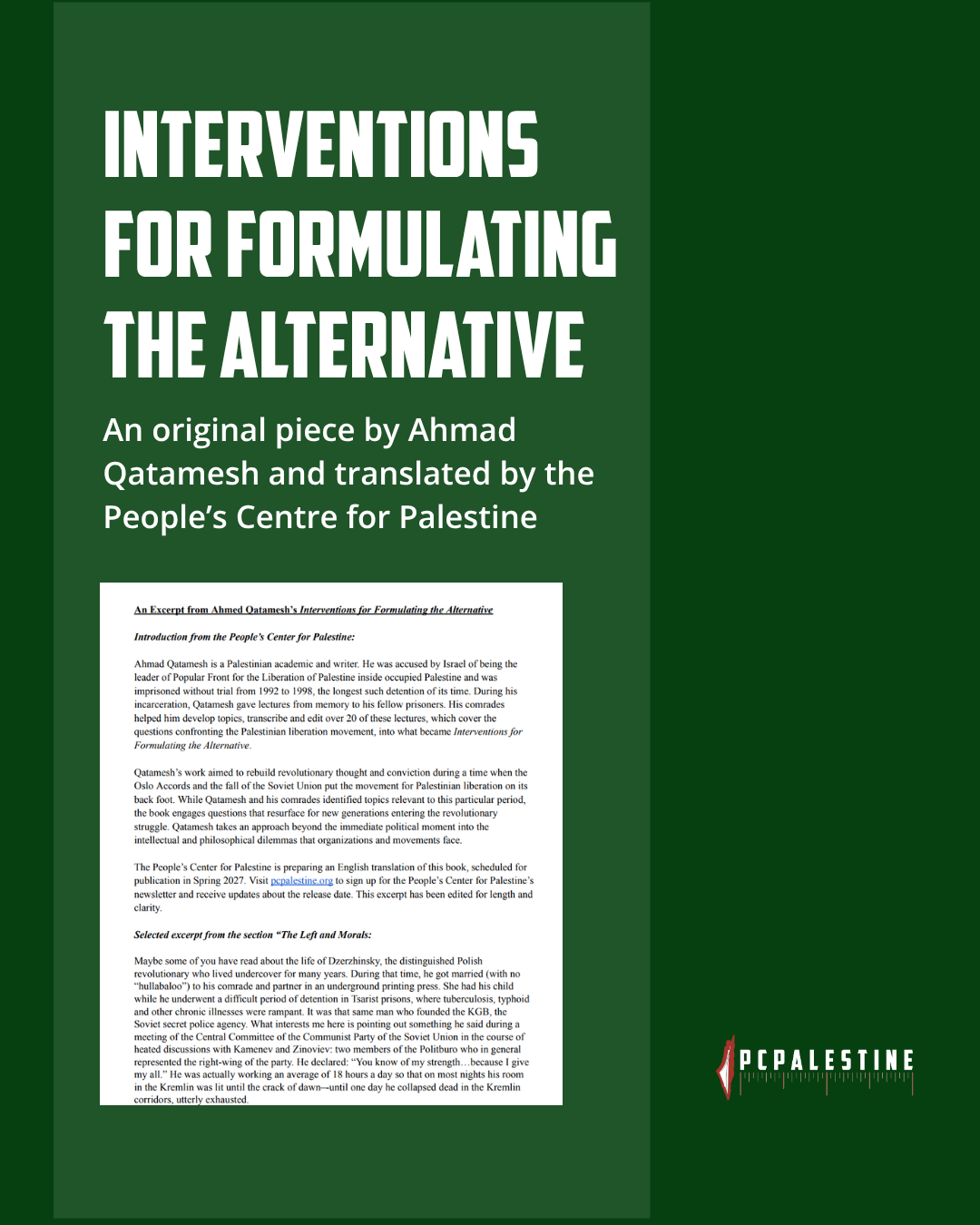
Ahmad Qatamesh is a Palestinian academic and writer. He was accused by Israel of being the leader of Popular Front for the Liberation of Palestine inside occupied Palestine and was imprisoned without trial from 1992 to 1998, the longest such detention of its time. During his incarceration, Qatamesh gave lectures from memory to his fellow prisoners. His comrades helped him develop topics, transcribe and edit over 20 of these lectures, which cover the questions confronting the Palestinian liberation movement, into what became Interventions for Formulating the Alternative.
Qatamesh’s work aimed to rebuild revolutionary thought and conviction during a time when the Oslo Accords and the fall of the Soviet Union put the movement for Palestinian liberation on its back foot. While Qatamesh and his comrades identified topics relevant to this particular period, the book engages questions that resurface for new generations entering the revolutionary struggle. Qatamesh takes an approach beyond the immediate political moment into the intellectual and philosophical dilemmas that organizations and movements face.
Ahmad Qatamesh is a Palestinian academic and writer. He was accused by Israel of being the leader of Popular Front for the Liberation of Palestine inside occupied Palestine and was imprisoned without trial from 1992 to 1998, the longest such detention of its time. During his incarceration, Qatamesh gave lectures from memory to his fellow prisoners. His comrades helped him develop topics, transcribe and edit over 20 of these lectures, which cover the questions confronting the Palestinian liberation movement, into what became Interventions for Formulating the Alternative.
Qatamesh’s work aimed to rebuild revolutionary thought and conviction during a time when the Oslo Accords and the fall of the Soviet Union put the movement for Palestinian liberation on its back foot. While Qatamesh and his comrades identified topics relevant to this particular period, the book engages questions that resurface for new generations entering the revolutionary struggle. Qatamesh takes an approach beyond the immediate political moment into the intellectual and philosophical dilemmas that organizations and movements face.